
Belize Wildlife Tour Trips Worth Planning
- Julian Saldana

- Jul 27
- 6 min read
The first sound you may notice in Belize is not silence. It is the low, rolling call of a howler monkey carrying through the forest, or the quick chatter of birds in the mangroves before a boat leaves the dock. A Belize wildlife tour is one of the best ways to experience the country beyond its beaches and ruins, especially for travelers staying in Hopkins, Placencia, Dangriga, or Punta Gorda.
Belize packs rainforest, rivers, wetlands, reef, and coastal lagoons into one remarkably accessible country. That variety means wildlife viewing can fit almost any vacation style. You might spend one morning looking for manatees near the coast, take a jungle walk beneath towering trees in the afternoon, and watch scarlet macaws cross the sky the next day. The key is choosing the right setting, timing, and guide for the animals you hope to see.
What Makes a Belize Wildlife Tour Different?
Wildlife encounters in Belize feel close because the country has protected large areas of forest, marine habitat, and wetlands. But close does not mean guaranteed. Wild animals follow their own schedules, weather changes conditions, and seasonal movement matters. A good guide helps you understand what is realistic, recognizes calls and tracks, and knows when to slow down and simply listen.
For visitors in Southern Belize, the biggest advantage is variety without long, complicated travel days. The region offers access to rainforest reserves, the Monkey River area, coastal waters, and the Maya Mountains. Private transportation also makes it easier to build a day around your hotel location, your group’s pace, and the type of experience you want.
Families often prefer gentler boat-based wildlife outings or shorter forest walks. Couples may enjoy pairing a river trip with a quiet beach afternoon. More active travelers can choose a full day that combines jungle hiking, waterfalls, or an inland adventure with animal spotting along the way.
Best Places to See Wildlife in Southern Belize
Cockscomb Basin Wildlife Sanctuary
Cockscomb Basin Wildlife Sanctuary is one of Southern Belize’s most rewarding places for a rainforest experience. Known internationally as a major protected area for jaguars, it is important to set expectations correctly: seeing a jaguar is extremely rare. These cats are elusive, mostly active at times when visitors are not hiking, and perfectly adapted to disappearing into thick forest.
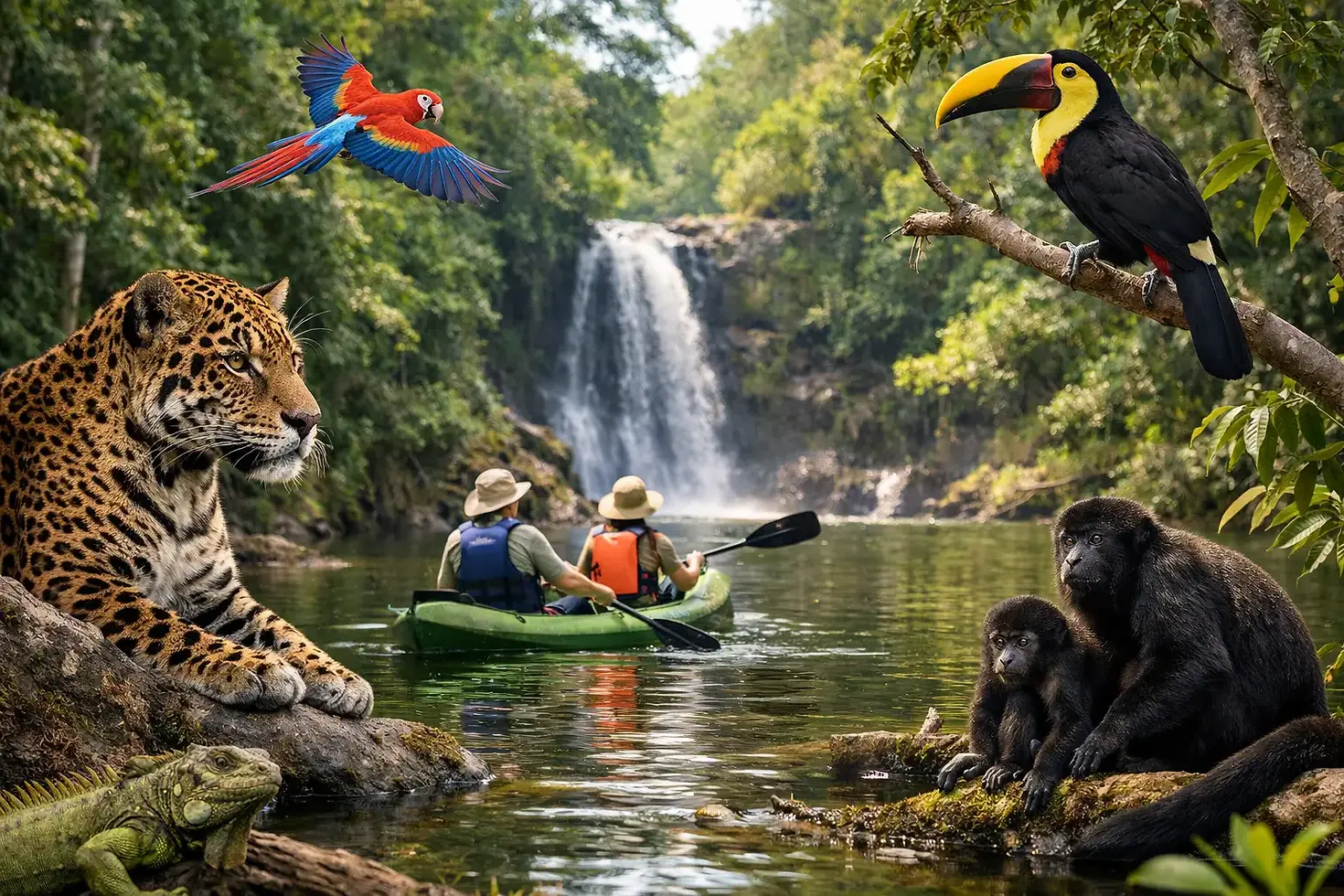
Still, Cockscomb is worthwhile even without a big-cat sighting. Trails pass through lush jungle where visitors may spot coatimundis, iguanas, agoutis, butterflies, toucans, and colorful smaller birds. You may hear howler monkeys before you see them. The forest itself is part of the experience - humid, green, alive, and full of sounds that are easy to miss without local interpretation.
Bring closed-toe shoes, water, insect repellent, and a light rain layer. Trail conditions can change after rain, so a moderate hike may feel more demanding during the wet season. If your group includes young children or anyone with limited mobility, ask for a route that matches their comfort level.
Monkey River and Coastal Mangroves
A boat trip on Monkey River offers a different kind of wildlife viewing. The river’s calm pace gives you time to scan the trees, watch the banks, and move through mangrove-lined sections where birds and reptiles are often easier to observe than on a busy trail.
Howler monkeys are a major highlight here, along with crocodiles, iguanas, turtles, herons, kingfishers, and occasional otters. Guides often know where troops have been active recently, but the river still keeps its surprises. One outing may bring close monkey views; another may deliver an exceptional morning for birds.
This is an excellent choice for travelers based in Placencia, and it can work well for mixed-age groups because much of the outing is on the water. A short walk may be included depending on conditions. Morning departures are generally a smart choice, when temperatures are cooler and many animals are more active.
Manatees Near Placencia and Southern Belize
Belize’s gentle West Indian manatees are among the country’s most memorable marine wildlife encounters. They are often seen in sheltered coastal waters, lagoons, and seagrass areas. Because manatees surface quietly and may remain underwater for several minutes, patience is part of the experience.
The best tours approach them slowly and respectfully. Wildlife viewing should never mean chasing an animal, crowding it with boats, or encouraging contact. Responsible operators keep a safe distance, follow local rules, and let the animal decide whether it remains nearby. You may also see rays, seabirds, dolphins, and juvenile fish in these productive coastal habitats.
Conditions matter on the water. Wind, rain, tide, and water clarity can all affect the day. A local guide can recommend whether a manatee-focused excursion, a river wildlife trip, or a snorkeling outing is the better fit for your dates.
Birding From Forest to Lagoon
Belize is a strong destination for casual birdwatchers and dedicated birders alike. You do not need a lengthy bird list to enjoy the experience. A flash of a keel-billed toucan, a roadside hawk on a utility pole, or a roseate spoonbill sweeping over a lagoon can turn an ordinary transfer day into a memorable sighting.
Forest reserves are ideal for parrots, toucans, trogons, and woodpeckers, while rivers and lagoons attract herons, egrets, kingfishers, osprey, and other water birds. Early morning is usually best, though a knowledgeable driver-guide can point out wildlife during road travel between destinations as well.
If birds are your main priority, say so when planning your tour. Your guide can adjust the pace, choose quieter viewing stops, and allow extra time when there is activity in the canopy.
How to Plan a Wildlife Day That Feels Easy
The best itinerary starts with where you are staying. Visitors in Placencia can easily focus on Monkey River, coastal wildlife, and nearby forest experiences. Travelers in Hopkins have convenient access to Cockscomb Basin and the wider Stann Creek District. Punta Gorda is a strong base for remote, less-visited southern landscapes, while San Ignacio is better suited to western jungle and river ecosystems.
Rather than trying to see every habitat in one day, choose one main experience and leave room for the unexpected. A rushed schedule can make wildlife viewing feel like checking boxes. A slower day gives you time to pause when monkeys call from the trees, a crocodile rests on a bank, or a guide hears movement in the brush.
Private transportation is especially helpful if your vacation includes more than one destination. Julian Transfers and Tours can coordinate door-to-door travel with a guided outing, so you can move between accommodations without losing a day to logistics. This works particularly well for guests traveling from Belize City to Hopkins or Placencia who want to add a meaningful stop along the route.
What to Bring and What to Leave Behind
A small daypack is enough for most wildlife outings. Carry refillable water, sunscreen, insect repellent, a hat, and a rain jacket. Neutral-colored clothing is useful for forest walks, while sandals are best saved for boat trips unless your guide recommends otherwise. Binoculars make a real difference for birds and monkeys, but they are not essential if you do not own a pair.
Bring a camera, but do not let it run the day. The best wildlife photographs come from patience and distance, not from getting closer than is safe or respectful. Avoid playing animal sounds to attract wildlife, feeding animals, touching marine life, or leaving any trash behind. Belize’s protected habitats remain special because visitors and local operators treat them with care.
When Is the Best Time to Go?
Wildlife can be seen year-round in Belize. The dry season, generally from late November through May, often brings easier trail conditions and sunny boating days. The greener, wetter months can make the forest especially lush and productive, although rain showers and muddier trails are more likely.
For daily timing, early morning usually offers the most comfortable temperatures and active birdlife. Late afternoon can also be rewarding, particularly along rivers and coastal wetlands. If your only available time is midday, do not skip the tour - just choose a boat-based or shaded forest experience and manage expectations.
A well-planned wildlife day is not about forcing a rare sighting. It is about being in the right habitat with someone who knows what the forest, river, and coast are telling you. Leave space in your Belize itinerary for that kind of day, and the country has a wonderful way of showing you something worth remembering.


Comments